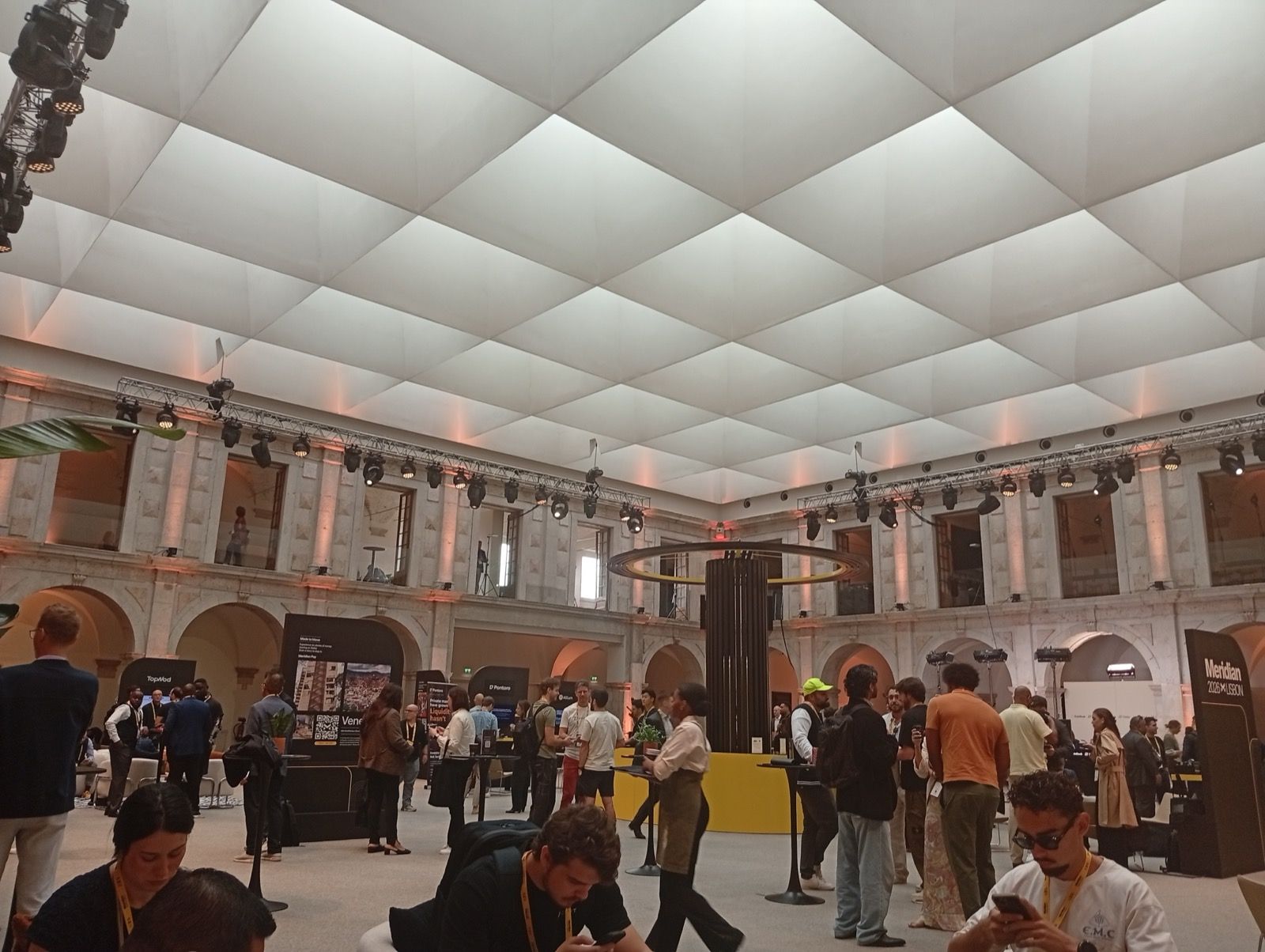
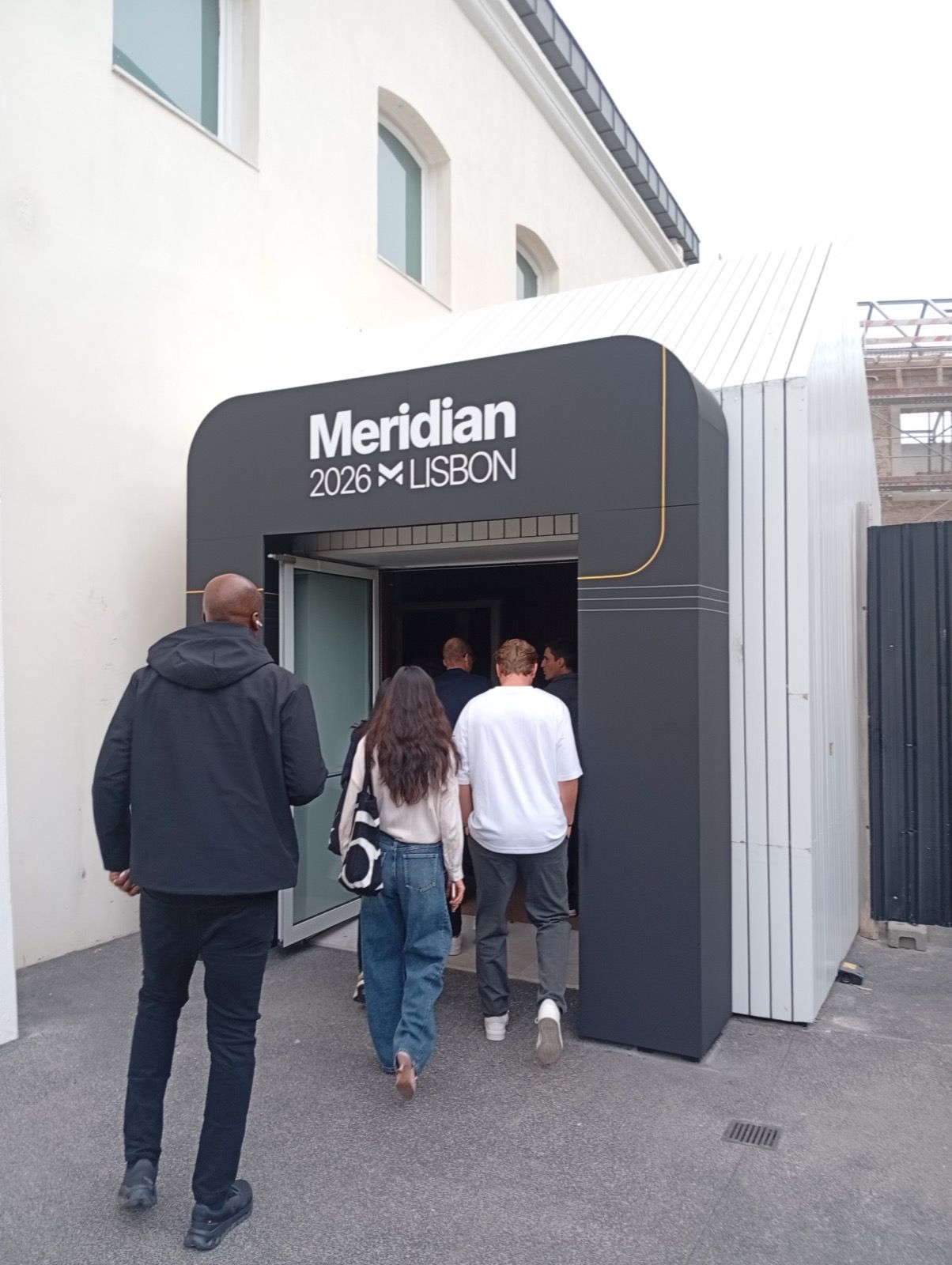
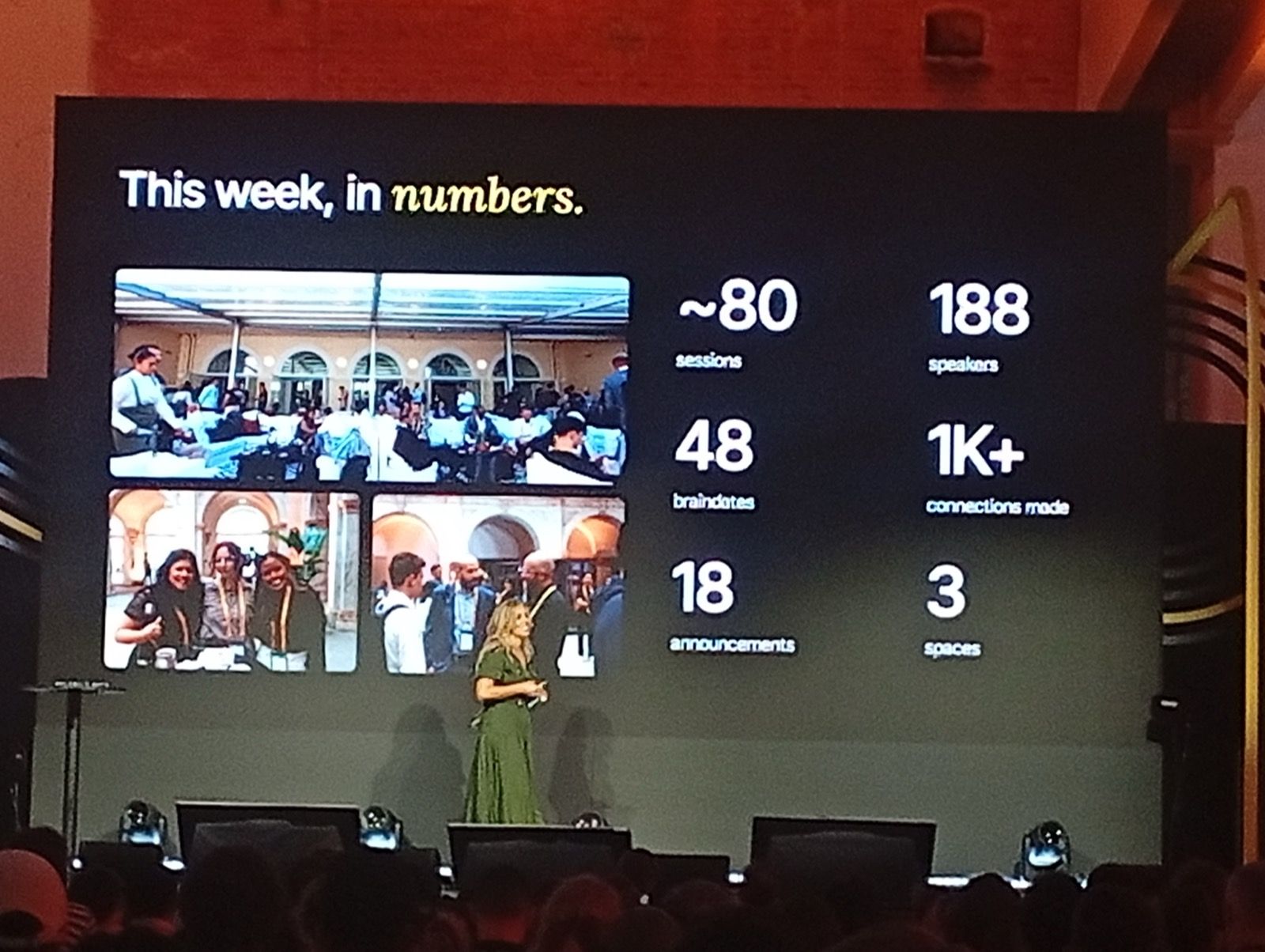
Two weeks ago we had the pleasure of attending Meridian 2026, the Stellar ecosystem's annual conference organized by the Stellar Development Foundation. This year's edition — the eighth — took place on October 28–29 at the stunning Convento do Beato in Lisbon, under the theme "Made to Move": a fitting slogan for a network that has spent a decade quietly becoming core infrastructure for payments and tokenized finance.
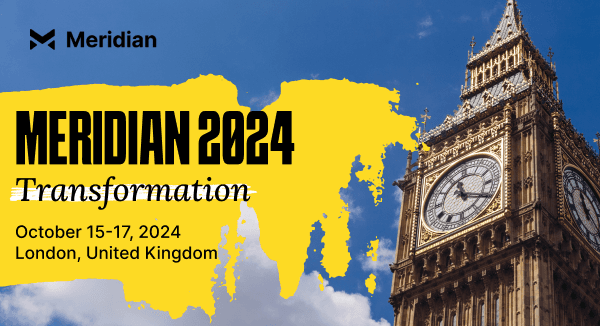
After our experience at Meridian 2024 in London ("Transformation"), returning to the community felt like picking up a conversation that never really stopped. Two days of keynotes, technical sessions, workshops, and ecosystem showcases confirmed what we suspected: Stellar is no longer proving the concept — it is scaling it.
A Venue Worthy of the Occasion
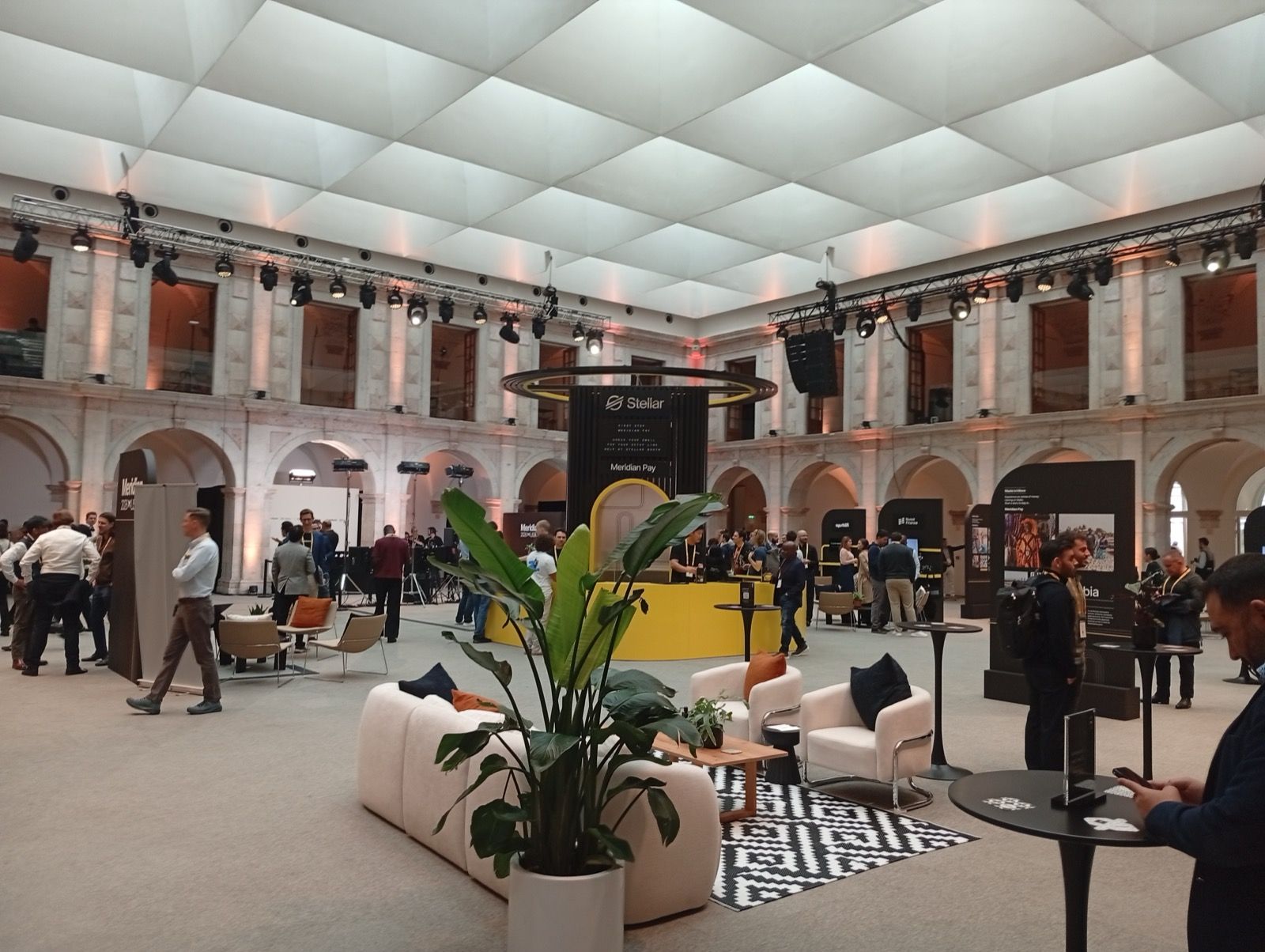
Convento do Beato, a restored 15th-century convent on the eastern side of Lisbon, was a memorable setting: centuries-old cloisters hosting conversations about quantum-safe signatures and onchain settlement. Lisbon itself — one of Europe's most vibrant tech cities — added its own energy to the event, and the Portuguese sunshine didn't hurt either.
The Next Ten Years of Stellar
The opening keynote brought Stellar Development Foundation leadership — Denelle Dixon, Nicolas Barry, Tomer Weller, Raja Chakravorti, and José Fernández da Ponte — to the Tejo Stage to lay out the roadmap for the network's second decade. The message was consistent and confident: Stellar's ambition is to be the most reliable network in regulated finance, moving from infrastructure to real-world utility at scale.
Central to that story is Bell, the Protocol 30 upgrade — announced just before the conference and a recurring topic across sessions. Bell makes smart accounts ready for businesses at scale, begins work on quantum-safe signatures, and pushes toward faster ledgers, with the testnet upgrade on November 3 and mainnet following on November 23. For builders like us, these are not abstract protocol details: they are the primitives that determine what we can offer enterprise clients in payments, identity, and asset issuance.
Institutions Have Arrived
What struck us most this year was the composition of the room. Alongside the developers and ecosystem builders we expected, there were banks, asset managers, payment companies, and policymakers — the institutions that Stellar has been courting for years, now present not as observers but as participants. Sessions on asset tokenization, regulated stablecoins, and cross-border payments felt less like pilots and more like production roadmaps.
Soroban, Stellar's smart contracts platform, has clearly matured since we first heard about it in London. The conversations have shifted from "what can it do?" to "what are you shipping with it?" — exactly the transition a platform needs to make.
Where Our Work Meets the Ecosystem
Meridian is always a checkpoint for us. Our work on Mozart Pay — our Stellar-based payment platform (currently in beta) built with Circle USDC and EURC — sits squarely in the payments narrative that dominated the agenda. Likewise, our open-source contributions to the ecosystem, including the Stellar Go CLI and the Stellar C++ SDK, benefit directly from the protocol direction discussed in Lisbon: smart accounts, ISO 20022 interoperability, and the tooling that regulated institutions will need.
The Stellar Hub — the heart of the conference floor, where partners demoed what they're building on the network — was a reminder of how broad the ecosystem has become: wallets, on-ramps, aid distribution, DeFi primitives, and institutional custody, all on the same rails.
HackMeridian and the Builder Pipeline
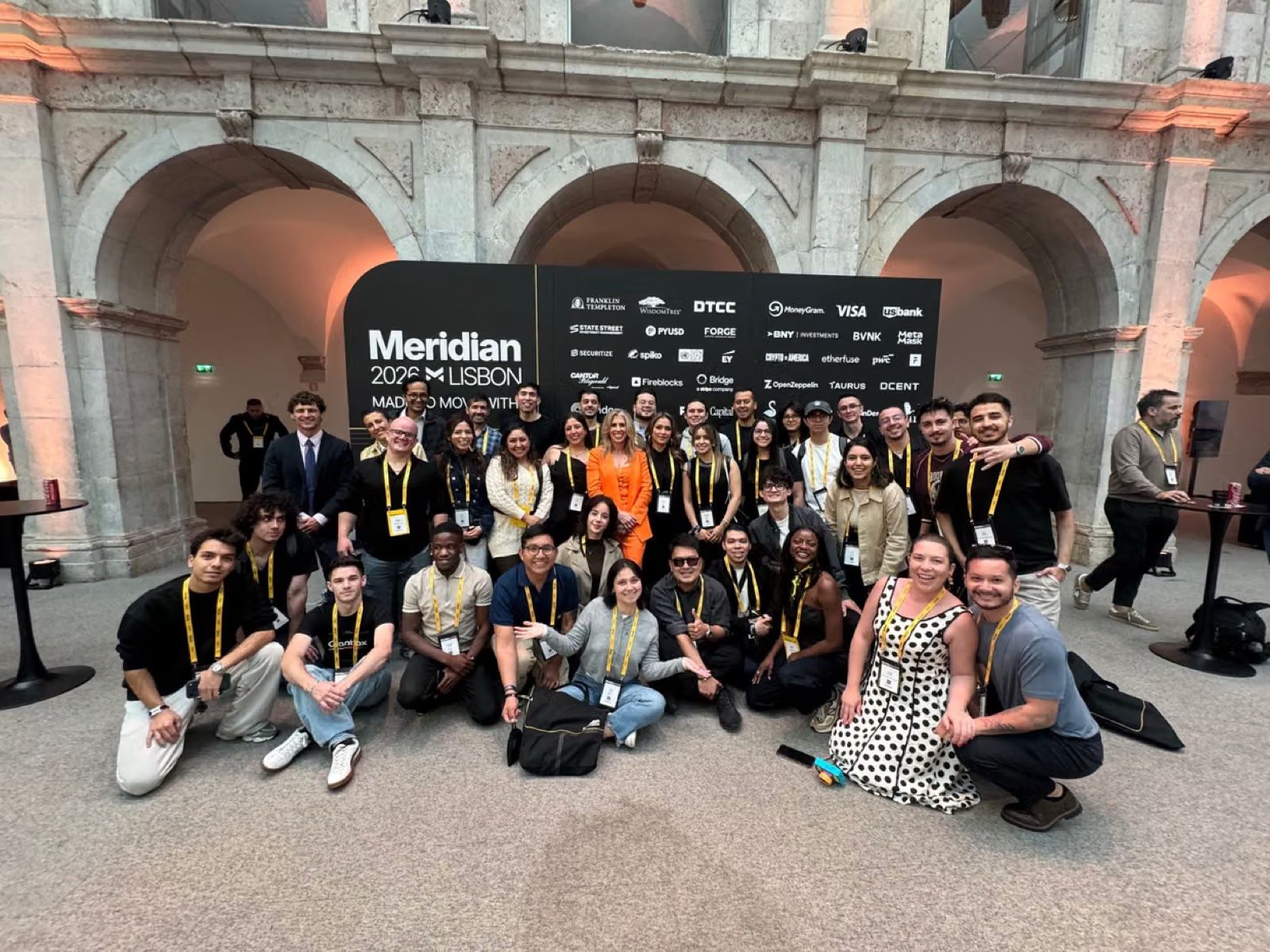
The conference was preceded by HackMeridian (October 25–26), which brought fresh energy and new builders into the ecosystem just days before the main event. It's a formula we appreciate: hackathons feed the community with ideas and prototypes, and Meridian gives them a stage and a path to become real products.
Until Next Year
We left Lisbon energized and with a full notebook. Meridian 2026 made one thing clear: the onchain economy is moving fast, and the Stellar ecosystem intends to be in the driver's seat. Thank you to the Stellar Development Foundation and the community for another outstanding edition — we're already looking forward to what 2027 brings.
If we met in Lisbon and you'd like to continue the conversation — about payments, tokenization, or building on Stellar — get in touch.
Frequently Asked Questions
What is the Meridian conference?
Meridian is the Stellar ecosystem's annual conference, organized by the Stellar Development Foundation. The 2026 edition — the eighth — was held October 28–29 at Convento do Beato in Lisbon under the theme "Made to Move," preceded by the HackMeridian hackathon.
What is the Bell upgrade (Protocol 30)?
Bell is Stellar's Protocol 30 upgrade, announced ahead of Meridian 2026. It makes smart accounts ready for businesses at scale, begins work on quantum-safe signatures, and targets faster ledgers — with testnet on November 3 and mainnet on November 23, 2026.
What is Soroban?
Soroban is Stellar's smart contracts platform, designed for efficient, secure on-chain programs. At Meridian 2026 the discussion had shifted from capabilities to production deployments across payments and tokenized assets.
Why does OG Technologies EU build on Stellar?
Stellar's focus on financial inclusion, fast low-cost settlement, and enterprise-ready asset issuance aligns with our payments work — including Mozart Pay (in beta), our Stellar-based payment platform built with Circle USDC/EURC, and our open-source Stellar Go CLI and C++ SDK.
OG Technologies EU is a Vienna-based consultancy helping enterprises and startups adopt AI, blockchain, and international standards — with a long-standing focus on the Stellar ecosystem.
#Meridian2026 #Stellar #MadeToMove #Protocol30 #Soroban #Blockchain #Payments #Tokenization #Lisbon #OGTechnologies