ISO/IEC 30111:2019 — Information technology — Security techniques — Vulnerability handling processes — is the international standard for what a vendor does inside the organization when a vulnerability is reported or discovered in one of its products. It is the process manual behind every mature PSIRT (product security incident response team): how reports are received, verified, fixed, shipped, and reviewed. In Europe it has been adopted as EN ISO/IEC 30111, and its importance jumped in 2024: the Cyber Resilience Act made documented vulnerability handling a legal obligation, and the harmonised standard being written to prove conformity is built normatively on 30111.
What the Standard Covers
ISO/IEC 30111 addresses the vendor-facing half of the vulnerability lifecycle — the internal handling that happens once a potential vulnerability exists, whether it arrived from an external researcher, an internal test, or a third-party advisory about a component you ship. It defines two layers:
- Policies and organizational framework — a documented vulnerability handling policy, defined roles and responsibilities (typically a PSIRT), and management support so the process survives staff changes and competing priorities.
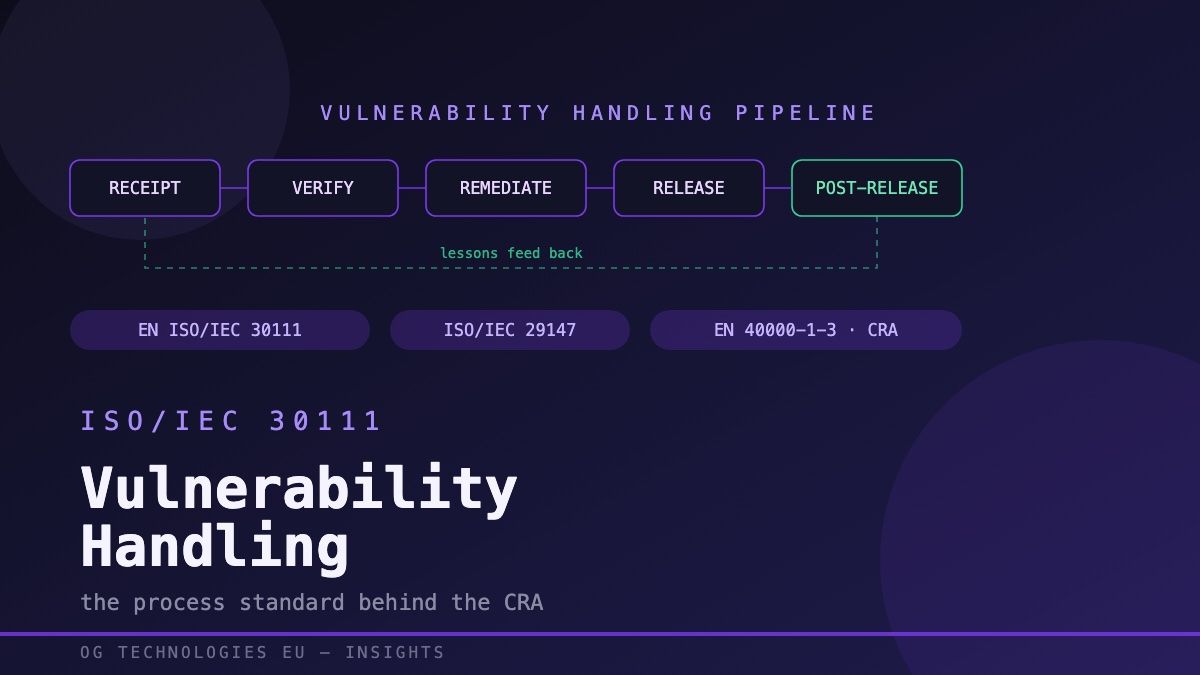
- Vulnerability handling phases — a defined pipeline each case moves through: Preparation (readiness: intake channels, tooling, SBOM, advisory templates), Receipt (acknowledge and record the report), Verification (reproduce, confirm, and scope affected versions), Remediation development (design, build, and test the fix — including deciding between mitigation and full remediation), Release (ship the fix with a coordinated advisory), and Post-release (monitor uptake, handle follow-on reports, feed lessons back into development).
- Process monitoring — metrics and reviews that keep the pipeline measurable: time-to-triage, time-to-fix, overdue cases, and post-release effectiveness.
ISO/IEC 30111 vs ISO/IEC 29147
The two standards are designed as a pair and are constantly confused:
- ISO/IEC 30111 is internal: the vendor's process for investigating and remediating vulnerabilities — what happens after the report lands.
- ISO/IEC 29147 is external: the disclosure interface — the vulnerability disclosure policy, how to receive reports (security.txt, contact channels, safe-harbor language), how to publish advisories, and how to coordinate with reporters and other affected parties.
Together they cover the full coordinated vulnerability disclosure (CVD) loop: 29147 governs the surfaces the outside world sees, 30111 governs the machinery behind them. The CRA-related standards work explicitly assumes both.
Why It Matters Now: The CRA and CEN-CENELEC JTC 13
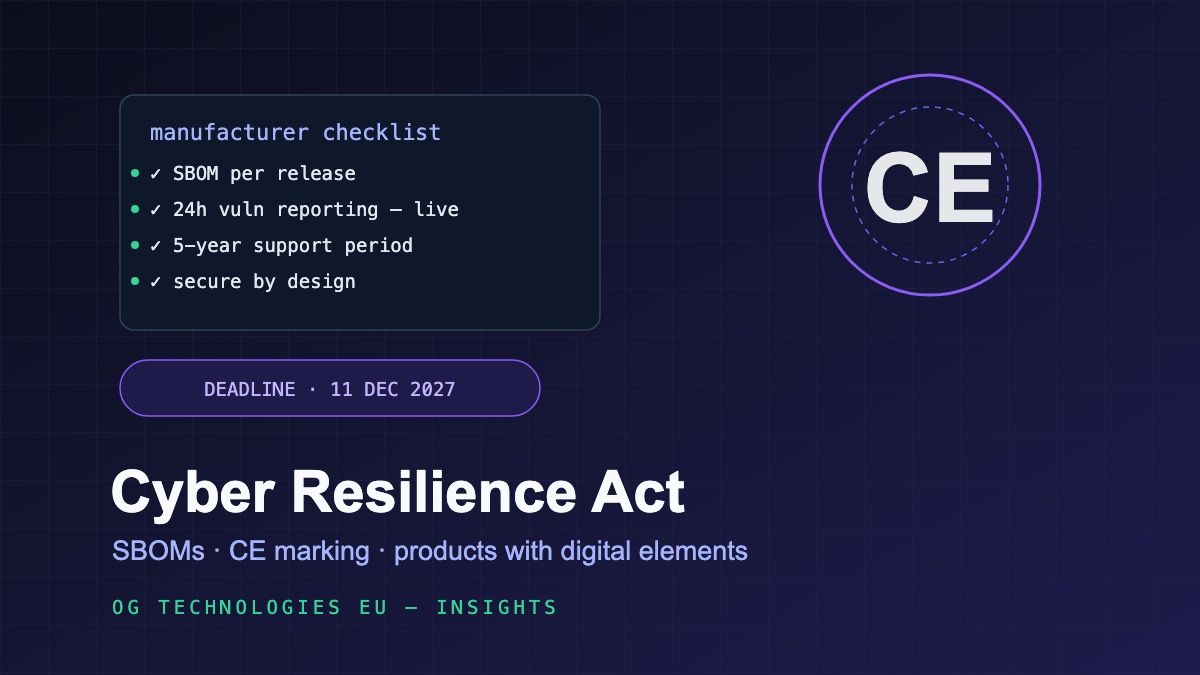
The Cyber Resilience Act requires manufacturers of products with digital elements to run an effective vulnerability handling process — Annex I Part II spells out duties from documenting components (the SBOM) to remediating vulnerabilities and delivering free security updates. Reporting duties for exploited vulnerabilities and severe incidents — 24-hour early warning, 72-hour notification — have applied since September 2026; the full product obligations land on 11 December 2027.
The practical question — what does a conforming process look like? — is being answered by CEN-CENELEC JTC 13, the joint technical committee for cybersecurity and data protection. Under Commission standardisation request M/606, JTC 13's dedicated CRA working group (WG 9) is producing the EN 40000 horizontal standards, including EN 40000-1-3 on vulnerability handling, which is expected to be cited in the Official Journal and give manufacturers presumption of conformity with the CRA's vulnerability-handling requirements. That standard is deliberately structured around the coordinated disclosure lifecycle and is normatively dependent on EN ISO/IEC 30111 and ISO/IEC 29147 — so an organization that already runs a 30111-style process is implementing the bulk of what the harmonised standard will assess.
JTC 13 is also the committee that adopts ISO/IEC cybersecurity standards into the European EN system — the same mechanism that made EN ISO/IEC 27001 the European edition of the ISMS standard. Tracking JTC 13 outputs is the reliable way to see which international standards are becoming EU compliance instruments.
Standing Up a 30111-Style Process
- Publish the interface: a vulnerability disclosure policy with a contact channel (security.txt, dedicated address), scope, and safe-harbor statement — the ISO/IEC 29147 half.
- Name the owner: a PSIRT or designated role with authority to pull engineering time when a case is verified.
- Instrument the pipeline: a register tracking each case through receipt → verification → remediation → release, with SLAs on triage and fix timelines proportionate to severity.
- Maintain the inventory: an SBOM per product so incoming CVE advisories map to shipped components in hours, not days — generate one with our SBOM generator.
- Template the advisory: a standard format for coordinated release notes so publication is a checklist, not a drafting exercise.
- Close the loop: post-release review feeding root causes back into secure development — which is what makes the process systematic in the sense auditors and the CRA expect.
The same discipline applies to on-chain code: a smart contract deployed as part of a product still needs a disclosure channel and a handling process — see our smart contract audit checklist for how audits and vulnerability handling fit together.
Frequently Asked Questions
Is ISO/IEC 30111 a certifiable standard?
No — it is a guidance standard, not a requirements standard like ISO/IEC 27001, so there is no accredited certification against it. Conformance is demonstrated by operating the documented process, and indirectly through the CRA's harmonised standards (EN 40000-1-3) once cited in the OJEU.
How does ISO/IEC 30111 relate to the Cyber Resilience Act?
The CRA mandates an effective vulnerability handling process but does not specify one. CEN-CENELEC JTC 13's EN 40000-1-3 — the harmonised standard for CRA vulnerability handling — is normatively built on EN ISO/IEC 30111 and ISO/IEC 29147. Running a 30111-style process is therefore the closest available preparation for presumption of conformity.
What is the difference between ISO/IEC 30111 and ISO/IEC 29147?
30111 covers the vendor's internal handling pipeline — verification, remediation development, release, post-release. 29147 covers the external disclosure interface — policy, receiving reports, publishing advisories, coordination. A complete coordinated vulnerability disclosure capability implements both.
How does it differ from vulnerability management in ISO 27001?
ISO/IEC 27001 Annex A control 8.8 addresses vulnerabilities in your own IT estate — patching the systems you operate. ISO/IEC 30111 addresses vulnerabilities in products you ship to others — the vendor-side process of triaging reports, developing fixes, and releasing advisories. Product vendors need both.
What is EN ISO/IEC 30111?
The European adoption of ISO/IEC 30111 through CEN-CENELEC JTC 13 — technically identical to the ISO/IEC text, published by national standardization bodies (for example DIN EN ISO/IEC 30111). The EN edition is the reference the CRA harmonised standards normatively depend on.